
What to Do When a Patent Expires?
Quite a curious question. Some may feel their whole world crashing the moment their patent expires. Who does not want their intellectual property protected forever? Nobody! This article will guide you on what to prepare for once you lose your patent.
What to Expect When a Patent Expires?
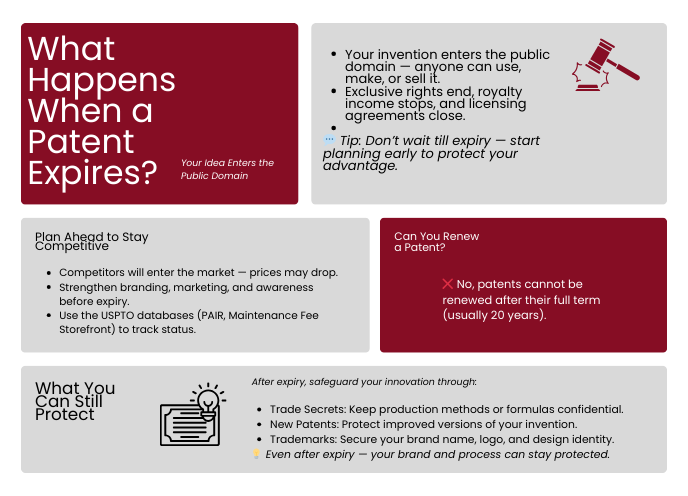
It will not be a good feeling to see your patent expires. A series of unwanted things occurs at once:
- Your intellectual property will become public domain.
- Others will be free to market and use your invention.
- Reception of patent-related royalties will stop.
- Relevant licensing agreements will no longer be eligible.
Others Marketing Your Invention is a Tough Experience
Others will feel free to use the invention your patent is based on once your patent expires. You will sell and market your invention regularly; you will not be the only one in the market to do so. A bad thing, no?
Licensing Agreements Will End and Your Royalty Payments Will Stop
Royalty payments from those who utilize your invention are expected to stop. All licensing agreements will disappear in a puff of smoke. Only a specific term and condition can save a licensing agreement in this case. But do not expect much: royalty agreements that continue after the patent expiry fall under “patent misuse” or any other form of antitrust violation.
Protect Your Invention Before You Regret!
Patent expiration does not have to mean the end of your innovation. Explore your best protection strategies with John Rhizvi: from renewals to trade secrets and beyond.
Should You Renew Your Patent?
Long story short: a patent cannot be renewed once it has expired. Even the most famous expired patents cannot be renewed. The only exception to this rule is that if a patent expires because of a genuine maintenance fees issue, then you can renew your patent until its original term expires.
Q: Can you renew a 20-year patent?
A: No! A 20-year patent cannot be renewed once its term ends. You can still protect related elements through trade secrets or new patents.
Options for an Expired Patent Holder
There are some options to consider if your patent has expired.
What You Should Know After Patent Expiries
Keep Your Trade Secrets Secret
Seek protection for the trade secrets in connection with your expired patent. Trade secrets are a different type of intellectual property. The one that is protectable under the law. The United States Patent Office explains a trade secret as:
- Something subject to reasonable struggle to maintain its secrecy.
- Holds value to those who cannot obtain the information legitimately.
- Information that has potential or actual economic value just because it is unknown.
Trade secrets always come in handy. Do not lose them along the way! You are required to “tell all” when you file your patent. Sometimes, optimal production processes and other information develop after you get the patent. It is good to consult a patent attorney before your patent expires so that you can protect elements of your invention under trade secret law.
Q: Can others legally copy your invention once the patent expires?
A: Yes! Anyone can legally produce, sell, or modify your invention without facing infringement issues once the patent expires.
Economic Impacts on Your Business
You should consider the effects your patent expiration will have.
Do not produce anything based on your invention if your patent expiry date is near. Others can jump in and decrease the demand for your particular product. It can impact your business economy. You will have to decide whether to lower the product price so you can compete with other products that will enter the market.
Be wary of the patent expiration time. You should know about patents expiring in 2026, and if that is the year when your patent will expire or not. Better safe than sorry!
Q: How does a patent’s expiration affect a business?
A: Competition rises sharply as others can market the same invention. It forces price reductions and strategy changes.
Advance Marketing Efforts
Your marketing efforts for the invention should be increased as the expiration date approaches. Brand awareness may not be essential, as your product was the only one in the market. However, never underestimate the importance of awareness, as you could enter the competition at any time. Trademarks must strongly protect your brand.
How to Know if a Patent Has Expired?
The easiest way is to search for the patent. Databases of third-party websites make it easy for you to conduct such searches.
The patent search informs you of the date the patent was filed and whether any amendments were made. If the patent is linked to the duration of another patent, then it may expire sooner than the filing date.
The Patent Office keeps the Pair Database to identify whether the maintenance fees of a patent are paid. You can check the USPTO Maintenance Fee Storefront to check the fee status of any patent if you have the serial number and the patent number.
We have covered everything that you should know when your patent expires. Follow the information and make your life a little easier!
FAQ
Expert Tip
“Once your patent expires, the core invention enters the public domain and competitors can freely copy it, so smart patent strategy is planning before expiry, such as developing follow‑on patents or protecting key elements as trade secrets to maintain competitive advantage.”

Bao Tran
U.S. Patent Attorney and IP Strategist