
Any successful business starts with an idea. This idea can become a product. A brand. A design. A creative work. Intellectual property and copyright law are the ways to provide legal protection for such assets. Good protection is needed for creators to have control over their creations. And also, it allows business development in all industries.
Key Takeaways
Idea makes the future. Companies conduct research and invest in it. An artist creates their unique work. An inventor finds a solution to a problem. Every creator needs to be protected in their efforts. The importance of intellectual property rights appears from the necessity of having legal protection to continue creating freely.
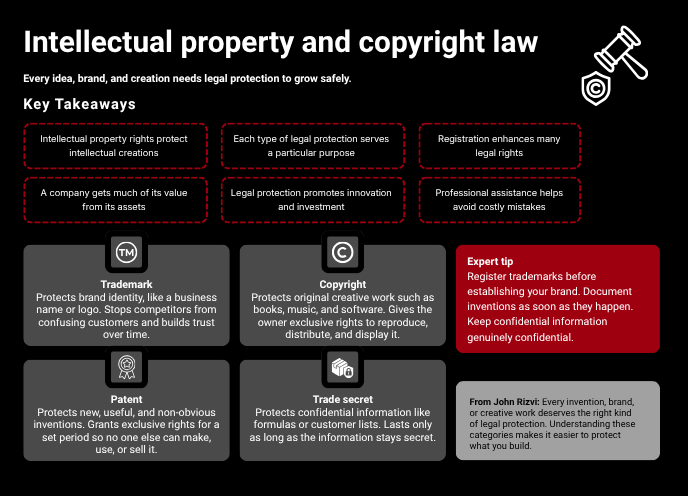
People often encounter legal terms that they do not understand. A trademark protects a brand. A copyright protects creative works. A patent protects an invention. And a trade secret protects confidential business information. Every form of protection serves its own purpose. Choosing the appropriate protection will make every business more efficient from the start.
Protecting your intellectual property professionally!
John Rizvi assists inventors, entrepreneurs, and business owners in creating a better legal strategy for all their ideas. Create better protection from the get-go.
What Are Intellectual Property Rights? You Might Know Some
Intellectual property rights allow owners to exert legal control over the creations resulting from human knowledge and creativity. It allows for licensing, selling, and enforcing the rights against infringement of one’s creation.
Having proper protection gives investors and entrepreneurs peace of mind. Businesses can grow thanks to intellectual property protection. Creators can receive money for their creative works. And consumers get the assurance of good quality with every branded product.
| Type | What It Protects | Common Example |
| Trademark | Brand identity | Business name or logo |
| Copyright | Original creative work | Books music software |
| Patent | New invention | Machine process or device |
| Trade Secret | Confidential information | Secret formula or customer list |
Understanding Trademarks
The trademark is used to denote the source of a good or service. Customers recognize a reliable company by its name. Logo. Slogan. Or symbol. The use of a trademark ensures that competitors do not create confusion in the market.
The trademark creates value for the business as well. Customers become familiar with the brand. Trust builds over time. The registered trademark makes enforcement easy when there is infringement. A business must check on the existing trademarks before branding.
Understanding Copyright
Copyright protects the original work of creativity that is tangible. It can protect books. Articles. Videos. Music. Pictures. Computer programs. And other creative works that meet the legal requirements.
The owner of the copyright is given exclusive rights to reproduce. Distribute. Display publicly. And adapt his or her work. Copyright intellectual property law gives the creator a chance to be rewarded for their effort. Understanding intellectual property and copyright law helps creators protect their original works while preserving their legal rights and commercial value.
Expert Tip
“Ensure that you register trademarks before establishing your brand. Document inventions as soon as they are invented. Keep your confidential information confidential.”

Kevin Noonan
Intellectual Property Attorney
Understanding Patents
Patents are granted for inventions which are novel, useful and non-obvious. Patent protection provides inventors with exclusive rights for a specified period of time. Nobody else can produce, use or sell the invention without authorization.
Preparation of patent applications is a challenging process which requires high-quality and accurate claims. The better your applications, the more protected your patent will be and the fewer disputes you may have in the future. A solid understanding of intellectual property and copyright law helps inventors strengthen their patent protection and reduce legal risks.
Understanding Trade Secrets
Confidential information can become valuable if it is kept secret. The formulae, manufacturing techniques, business plans, customer lists and other proprietary information are covered by trade secret protection. It lasts until secrecy exists.
It is essential to keep your confidential information secret by taking protective measures. Limited access, agreements and good storage provide you with legal protection while the information is secret. Strong intellectual property and copyright law strategies also help businesses safeguard confidential information alongside other valuable intellectual assets.
Why Are Intellectual Property Laws Important
There are many reasons to consider the importance of intellectual property laws. It goes much deeper than just the legal property protection. Research, creativity, investment, competition, and economic development are some examples. Without such laws, many inventors might be reluctant to make their innovations known to the public.
Intellectual property and copyright law also play an essential role when it comes to protecting consumers. Brand protection ensures no misunderstanding will occur among consumers. Copyright protection helps to give appropriate payment to creators. Patent protection ensures that technology will develop in the right way.
Take care of your intellectual assets!
Do so now rather than having troubles later. John Rizvi guides you on intellectual property and copyright law to protect your trade secrets and everything related to your IP.
Conclusion
Any invention, brand, or creative work needs appropriate legal protection. Intellectual property and copyright law provide possibilities to develop while reducing unnecessary risks. Learning about intellectual property and copyright laws makes it possible for businesses to protect their assets with ease.